










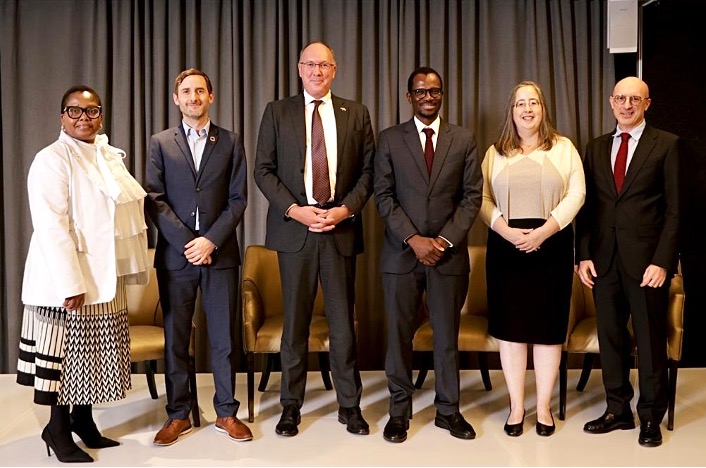
Pretoria, Gauteng – 25 March 2026 – The National Treasury, in partnership with key local and international stakeholders, has officially launched SA-TIED Phase III, a major initiative aimed at strengthening evidence-based economic policymaking in South Africa.
The launch took place following the conclusion of the SA-TIED Phase II conference on 24 March, marking a new chapter in the country’s efforts to align research with government decision-making.
Tackling Economic Challenges Through Evidence
The Southern Africa – Towards Inclusive Economic Development (SA-TIED) programme is a collaboration between:
- The South African Revenue Service
- The United Nations University World Institute for Development Economics Research
- With support from the European Union and the Government of the United Kingdom
The initiative focuses on embedding credible data and research directly into policymaking processes to address South Africa’s pressing economic challenges, including unemployment, inequality, and slow growth.
Deputy Finance Minister Dr David Masondo emphasised the importance of evidence-driven governance:
“Good policy must be grounded in credible evidence. Better evidence leads to better policy, and better policy leads to better outcomes for our people.”
Phase II Delivers Strong Results
SA-TIED Phase II has delivered significant outcomes, including:
- Over 130 research papers informing government policy
- 65% of research led by South African scholars
- Strong gender inclusion, with 63% female participation
- Training of more than 200 participants, including government officials
A key milestone was the development of the National Treasury Secure Data Facility, which allows researchers access to anonymised tax data for advanced economic analysis.
The facility has already supported over 65 researchers and is being recognised globally as a model for responsible data use.
Data Innovation Driving Policy Impact
Through improved access to administrative and tax data, South Africa is strengthening its ability to:
- Design effective fiscal and economic policies
- Measure policy outcomes with accuracy
- Improve transparency and accountability
The programme has also contributed research in critical areas such as:
- Job creation and enterprise development
- Public revenue and taxation
- Labour markets and inequality
- Climate-related challenges in food, energy, and water
Phase III Focus: Efficiency and Impact
SA-TIED Phase III (2026–2029) will build on these achievements, with a stronger focus on:
- Linking research directly to policy implementation
- Expanding access to government data systems
- Strengthening state capacity through training and skills development
A major new priority will be public expenditure efficiency, ensuring that government spending delivers maximum value in a constrained fiscal environment.
Global Partners Reaffirm Support
International partners have reaffirmed their commitment to the programme’s next phase.
Incoming UNU-WIDER Director Patricia Justino highlighted the importance of research in uncertain times:
“Research is not a luxury. In times of uncertainty, it becomes even more critical to guide effective decision-making.”
EU Deputy Ambassador Fulgencio Garrido Ruiz and UK High Commissioner Antony Phillipson both stressed the importance of evidence-based policy in addressing complex economic challenges.
Meanwhile, Johnstone Makhubu reaffirmed the role of data in shaping policy:
“Tax administration data is the lifeblood of research and economic policy design.”
Building a Stronger Economic Future
The launch of SA-TIED Phase III signals a continued commitment to:
- Smarter policymaking
- Stronger institutions
- Inclusive economic growth
As South Africa faces increasing global and domestic pressures, the programme is expected to play a key role in ensuring that government decisions are informed, effective, and impactful.