




By Fanelo Maseko – Managing Editor, Loxion News
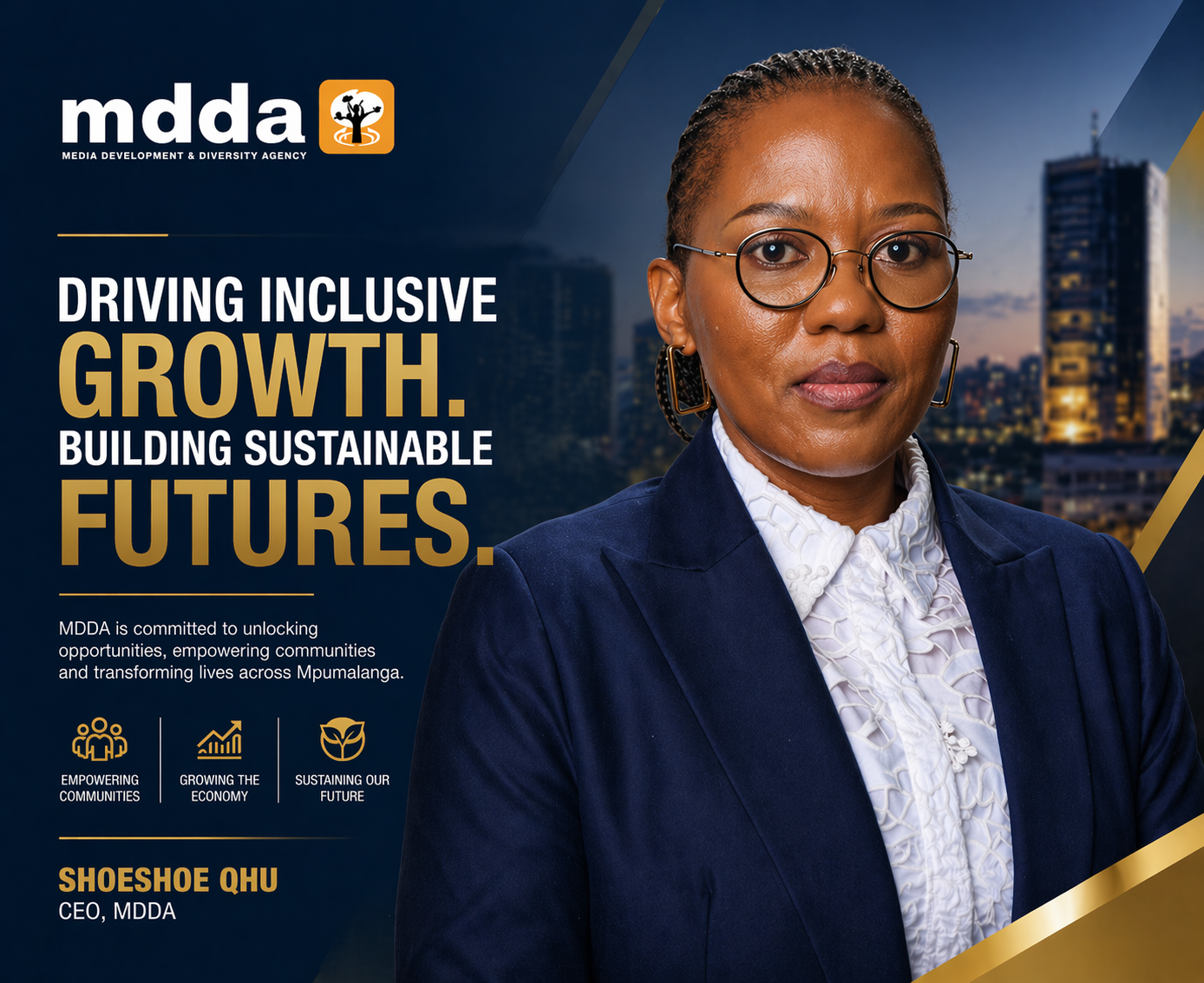
In a sector often shaped by competing interests, uneven support, and long-standing tensions between platforms, leadership at the Media Development and Diversity Agency has never been more important. Since her appointment in January 2024, Shoeshoe Qhu has begun to distinguish herself not through loud proclamations, but through something far more impactful, consistent, fair, and decisive leadership.
Community media in South Africa has historically grappled with perceptions of imbalance. Previous administrations at the MDDA have, fairly or unfairly, been criticised for leaning toward one sector over another, particularly favouring community radio at the expense of community print. Whether rooted in policy direction or resource constraints, that perception created a quiet but persistent divide within the industry.
What makes Qhu’s tenure notable is her clear departure from that pattern.
From the outset, she has demonstrated a deliberate commitment to equity across the media spectrum. Rather than reinforcing old divides, she has approached the role with a broader understanding of media diversity, one that recognises that community radio and community print are not competitors, but complementary pillars of grassroots information ecosystems.
This balanced approach was recently brought into sharp focus through her handling of a long-standing issue affecting community print publications: the burden of Press Council fees particularly for community print sector. After being approached by the African Chamber of Media ACM, Qhu acted with notable urgency and clarity, approving support for these fees across the sector.
It may seem like an administrative decision on the surface, but its implications run deeper. For many small, community-based newspapers, these fees are not insignificant. They can mean the difference between maintaining ethical compliance and struggling to stay afloat. By intervening swiftly, Qhu did more than solve a financial challenge, she reinforced the legitimacy, sustainability, and credibility of community print media.
More importantly, she did so without fanfare or selective application. The decision was not framed as a favour, but as a necessary intervention, one that acknowledges the structural challenges facing the sector.
That, in many ways, captures the essence of her leadership style: hands-on, responsive, and grounded in fairness.
Qhu’s background makes this approach unsurprising. Having started as a volunteer field reporter at Radio Zibonele in 2004, she understands the realities of community media from the ground up. She is not removed from the struggles of the sector; she has lived them. Her journey through broadcasting, regulatory compliance, and stakeholder management has equipped her with both the technical knowledge and the human insight required to lead effectively.
But experience alone does not define leadership, but execution does.
And so far, her execution suggests a CEO who is not interested in perpetuating old biases or institutional inertia. Instead, she appears focused on restoring confidence in the MDDA as a truly impartial custodian of media development.
This matters, particularly at a time when media diversity is under pressure globally. In South Africa, where community media plays a critical role in amplifying local voices, preserving language diversity, and strengthening democracy at grassroots level, the MDDA’s role cannot be overstated.
Leadership that understands this responsibility – and acts on it decisively is very rare.
Of course, it is still early in Qhu’s tenure, and the challenges facing the sector are far from resolved. Funding constraints, digital migration, sustainability, and policy alignment remain ongoing concerns. But early signals matter, and in this case, they are encouraging.
By refusing to “choose sides” and instead choosing fairness, Qhu is quietly reshaping expectations of what MDDA leadership can look like.
If this trajectory continues, there is reason to believe that community print media, often the overlooked sibling in the sector, is finally in capable and attentive hands.
And perhaps more importantly, that the broader vision of a truly diverse and inclusive media landscape in South Africa is being taken seriously again.