











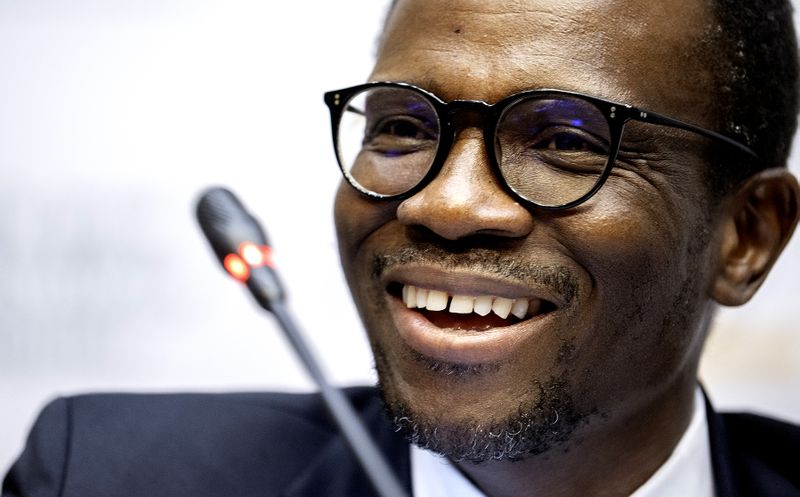
Pretoria, Gauteng – 24 March 2026 – South Africa is doubling down on data-driven economic reform as the National Treasury launches SA-TIED Phase III, with Deputy Finance Minister Dr David Masondo warning that evidence-based policy is critical in navigating global uncertainty and rising oil prices.
Speaking at the launch in Menlyn, Pretoria, Masondo highlighted the growing pressure on South Africa’s economy, including low growth, high unemployment, deep inequality, and global economic shocks.
Economic Reforms Tested by Global Oil Shock
A major highlight of the address was the impact of the current global oil shock, which has driven up fuel prices and increased economic strain.
Masondo noted that recent structural reforms in the energy sector have helped cushion South Africa from the worst effects.
“If we were still relying heavily on diesel to prevent load shedding, South Africa would be facing extremely high energy costs and widespread power outages,” he said.
Key reforms include:
- Reduced reliance on Eskom as the sole electricity provider
- Liberalisation of the energy market
- Progress in resolving Eskom’s R420 billion debt
- Improved maintenance and recovery of power generation infrastructure
As a result, South Africa is currently experiencing improved energy stability, despite global fuel price pressures.
SA-TIED: Driving Evidence-Based Policymaking
The Southern Africa – Towards Inclusive Economic Development (SA-TIED) programme focuses on using credible data and research to inform government decisions.
Masondo emphasised that:
“Better evidence leads to better policy, and better policy leads to better outcomes.”
Phase II of the programme successfully:
- Strengthened collaboration between policymakers and researchers
- Improved research in fiscal policy, labour markets, trade, and energy
- Bridged the gap between academic research and real-world policy implementation
Key institutions involved include the South African Revenue Service and global research partner United Nations University World Institute for Development Economics Research.
Data Innovation Positions SA as a Global Leader
South Africa has emerged as a leader in the Global South through its use of administrative tax data and secure data systems.
Through the Treasury’s secure data facility:
- Policymakers can analyse real economic behaviour
- Policies can be tested with precision
- Government accountability is strengthened
This model is now influencing other countries in the region.
What Phase III Will Deliver (2026–2029)
SA-TIED Phase III will expand its focus to address key economic priorities, including:
- Public revenue mobilisation
- Poverty, inequality, and labour markets
- Macro-fiscal policy
- Climate challenges across food, water, and energy
A new priority area will be improving public expenditure efficiency, ensuring that limited government resources deliver maximum impact.
Strengthening Government Capacity
The programme will be guided by three strategic priorities:
- Deepening evidence-based policymaking
- Expanding data infrastructure and access
- Building state capability through skills and training
Masondo stressed that successful reform depends not just on ideas, but on the state’s ability to implement them effectively.
Strong Global Partnerships
The initiative continues to benefit from international collaboration, including:
- The European Union
- The Government of the United Kingdom
- UNU-WIDER
These partnerships are helping to build long-term institutional strength and policy innovation in South Africa.
A Critical Moment for South Africa’s Economy
With global uncertainty rising and domestic reforms underway, the launch of SA-TIED Phase III comes at a pivotal time.
The programme is expected to:
- Improve government decision-making
- Strengthen economic resilience
- Support inclusive growth
- Help South Africa better withstand global shocks
Masondo concluded that evidence-based policymaking is no longer optional, but essential in today’s uncertain world.