











By Loxion News | April 2026
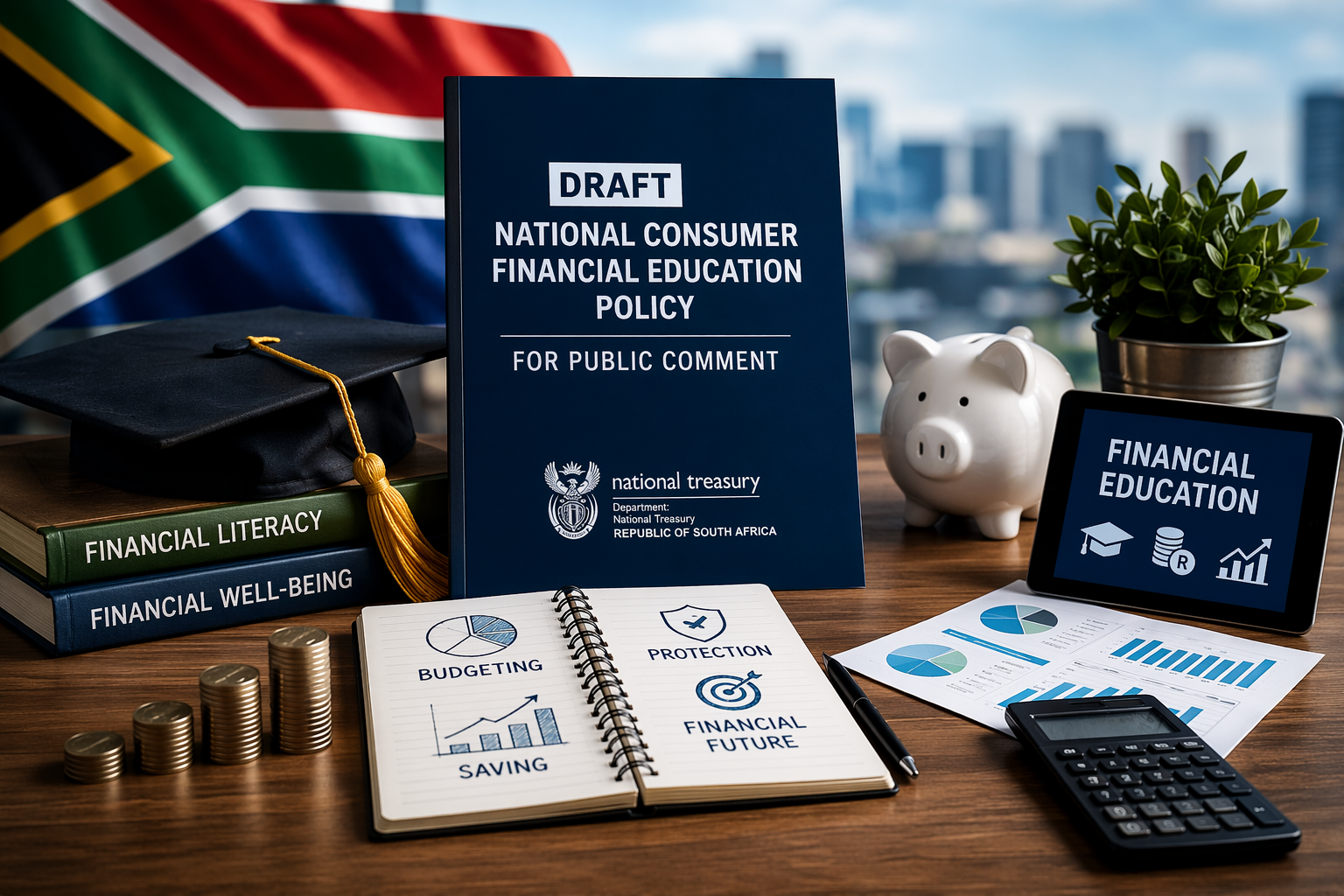
The National Treasury South Africa has officially published the Draft National Consumer Financial Education Policy for public comment, marking a significant step toward strengthening financial literacy and improving financial outcomes for South Africans.
Strengthening Financial Literacy in South Africa
The proposed policy forms part of broader efforts to promote:
- Fair treatment of financial customers
- Responsible conduct within financial markets
- Greater financial inclusion across the country
While South Africa boasts a well-developed and highly regulated financial system, authorities have raised concerns that increased access to financial products has not necessarily translated into better financial well-being for consumers.
Challenges Facing Consumers
According to the Treasury, many South Africans still struggle with:
- Low levels of financial literacy
- Limited digital literacy
- Difficulty navigating complex financial products
These challenges leave consumers vulnerable to:
- Exploitation and financial scams
- Poor financial decision-making
- Increased risks within the financial system
The department warned that persistent gaps in knowledge continue to erode public trust in financial institutions.
A National Framework for Financial Education
The draft policy proposes a coordinated national framework aimed at:
- Improving financial capability
- Promoting informed financial decision-making
- Enhancing long-term financial well-being
It also outlines:
- Key policy priorities
- Governance structures
- System-wide coordination tools
These measures are intended to ensure a more unified and impactful approach to financial education across South Africa.
Public Participation Encouraged
The National Treasury South Africa is inviting members of the public, stakeholders, and industry experts to submit their comments on the draft policy.
Deadline for submissions: 15 May 2026
Email: financialeducation.policy@treasury.gov.za
In addition, the Treasury will host virtual stakeholder workshops, with further details to be announced.
What Happens Next?
Feedback received during the public consultation process will be used to:
- Refine the draft policy
- Inform updates to the National Consumer Financial Education Strategy (NCFES)
- Shape the final implementation plan