











By Loxion News | April 2026
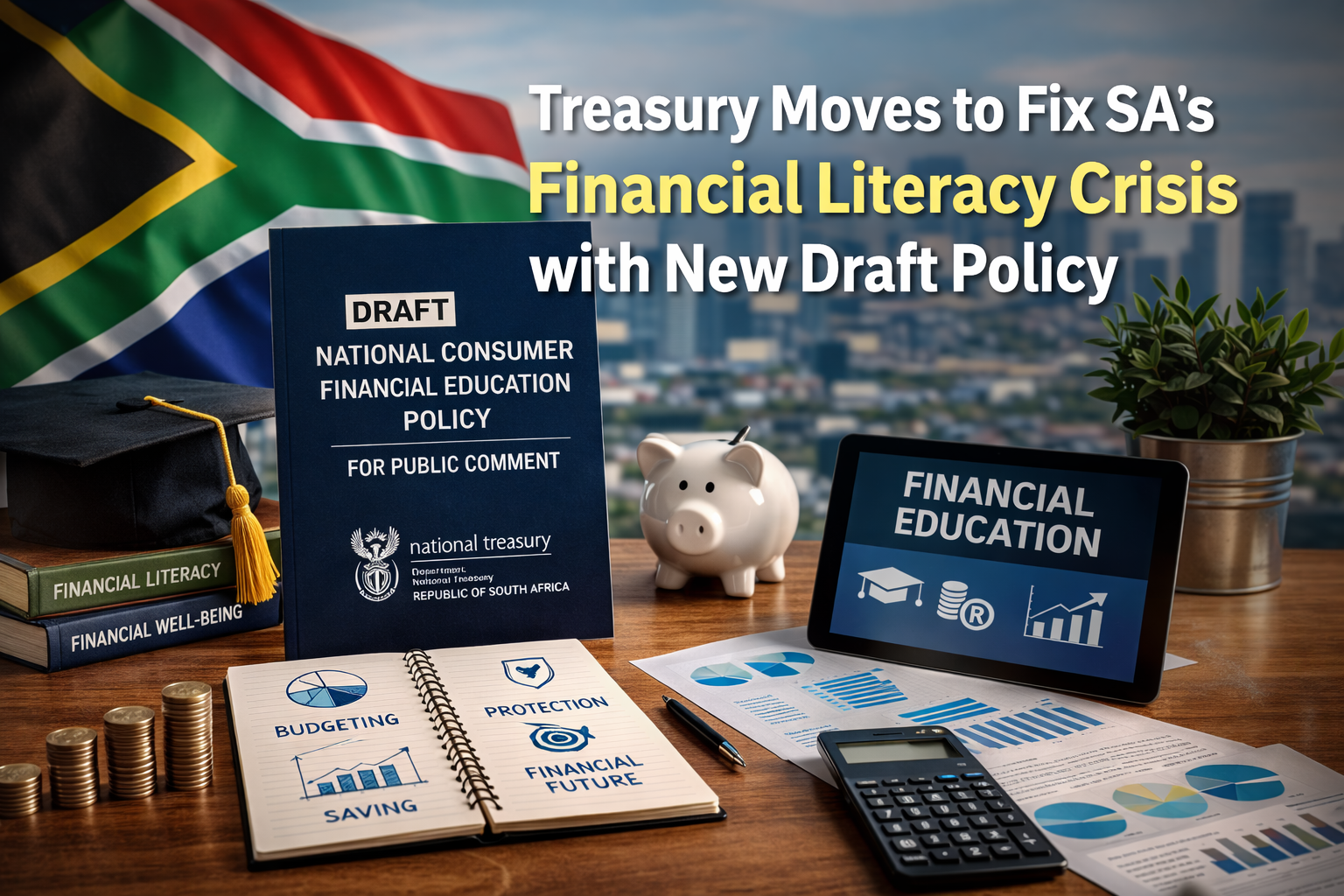
South Africa is taking a decisive step toward improving financial literacy, as the National Treasury South Africa has released its Draft National Consumer Financial Education Policy for public comment.
The proposed policy aims to tackle a growing concern: despite widespread access to banking and financial services, many South Africans are still struggling to make informed financial decisions.
Access Without Understanding
While South Africa has one of the most advanced financial systems on the continent, the Treasury warns that access does not equal empowerment.
Millions of consumers continue to face challenges such as:
- Misunderstanding financial products
- Falling victim to scams and predatory practices
- Struggling with digital financial platforms
These issues are largely driven by low financial and digital literacy, which the draft policy seeks to address head-on.
Why This Matters
The Treasury highlights that gaps in financial knowledge:
- Increase vulnerability to fraud and exploitation
- Undermine trust in financial institutions
- Lead to poor long-term financial outcomes
In an increasingly digital economy, these risks are becoming more severe.
A New National Framework
The draft policy introduces a coordinated national approach to financial education, focusing on:
- Building financial capability across all income groups
- Promoting responsible use of financial products
- Strengthening collaboration between government, industry, and educators
- Improving access to clear and understandable financial information
This framework will guide how financial education is delivered across South Africa.
Adapting to a Digital Financial Future
With more services moving online, the policy places strong emphasis on:
- Digital financial literacy
- Safe use of mobile banking and fintech platforms
- Consumer awareness in a digital economy
This ensures that South Africans are not left behind as financial systems evolve.
Public Participation Encouraged
The National Treasury South Africa is calling on:
- Financial experts
- Industry stakeholders
- Members of the public
to submit their input on the draft.
Deadline: 15 May 2026
Submissions: financialeducation.policy@treasury.gov.za
Virtual stakeholder workshops will also be hosted to gather further input.
What Happens Next?
Feedback from the public will be used to:
- Refine the draft policy
- Update the National Consumer Financial Education Strategy
- Develop a detailed implementation plan
The Bigger Picture
This policy signals a broader shift toward:
- Greater financial inclusion
- Stronger consumer protection
- A more informed and financially resilient society
If successfully implemented, it could play a key role in closing South Africa’s financial literacy gap and empowering millions to take control of their financial futures.